
Sometimes the best answer to a legal rejection is not more legal argument.
It is a declaration from your scientist or engineer.
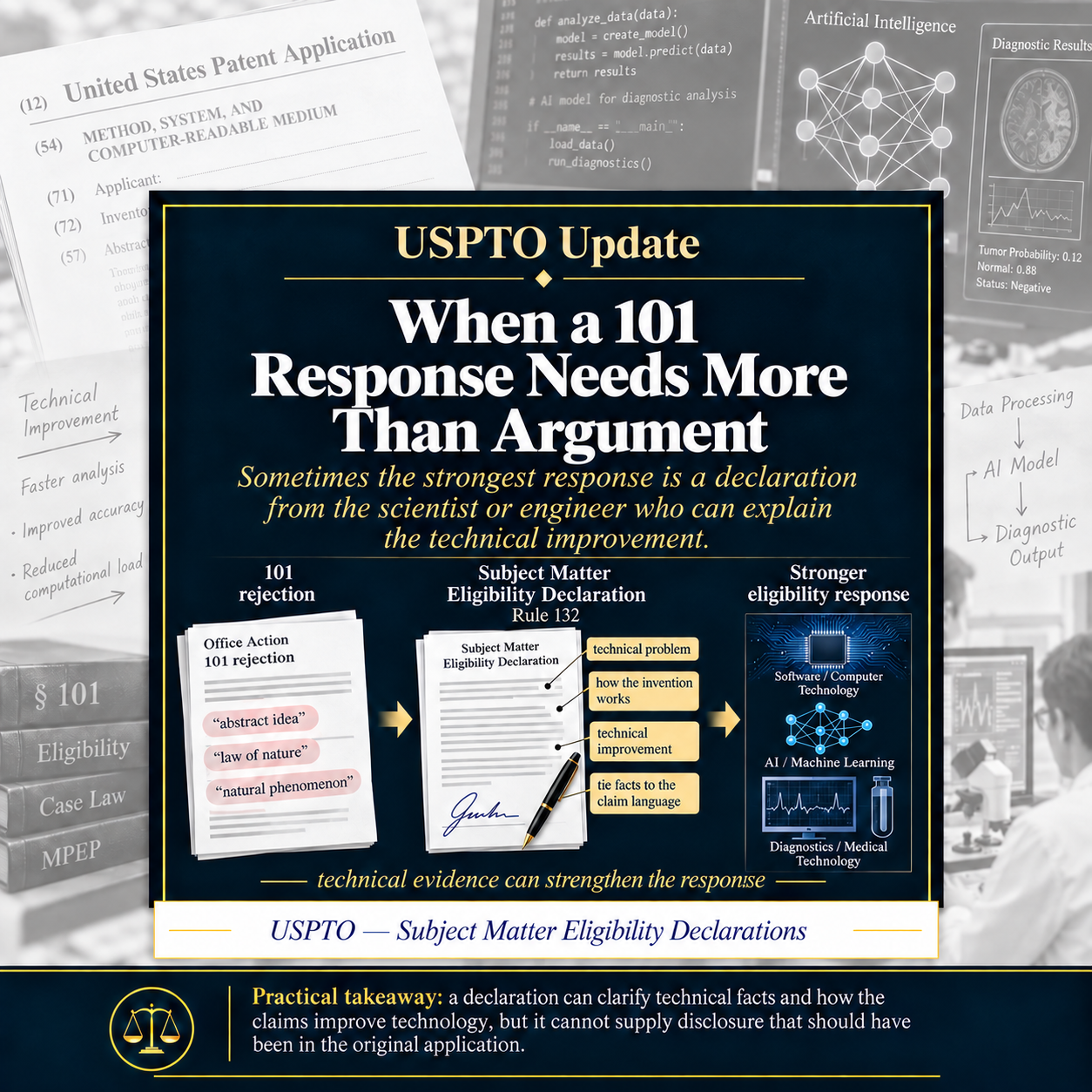
On April 30, 2026, the USPTO updated its guidance on using technical declarations to respond to Section 101 rejections. The update builds on December 2025 guidance and discusses fields including software, AI, and diagnostics.
These rejections can arise when an examiner concludes that the claims cover an abstract idea, law of nature, or natural phenomenon without the additional features needed to qualify for a patent.
The tool is called a subject matter eligibility declaration, submitted under existing Rule 132 practice. In plain terms, it is a signed statement presenting technical evidence from someone who knows the relevant facts, such as an inventor, scientist, or engineer.
It can explain how the invention works, what technical problem it solves, and how the claimed features improve the technology. Simply stating that the invention deserves a patent is not enough.
The USPTO says early feedback indicates that applicants submitting these declarations are having success. The memo does not provide a success rate.
The guidance recommends keeping the declaration focused on eligibility, separate from other issues. Tie the evidence to the actual claim language. And ground the explanation in what the application already discloses.
That last point matters.
A declaration can explain the technical facts. It cannot supply information that was required in the original application. The necessary disclosure must be there when the application is filed.
Practical takeaway: for medical-software and diagnostic companies, bring scientists and engineers into the drafting conversation—not just the response to a rejection.
What technical problem did the team solve?
How do the claimed features produce the improvement?
Where does the application explain that?
Describe the process, the technical changes, and how those changes improve performance. Make sure the claims reflect that explanation. These are the facts a declaration may later help clarify.
The April update offers guidance on using an existing tool. It does not introduce a new eligibility standard or guarantee that a rejection will be withdrawn.
A declaration can strengthen the explanation behind your response.
But the drafting work starts before the rejection arrives.
Source:
USPTO, Best Practices for Submission of Rule 132 Subject Matter Eligibility Declarations (SMEDs)
April 30, 2026.
https://www.uspto.gov/sites/default/files/documents/smeds-application-practitioners-4302026.pdf