
The investor asked, “What does your IP look like?”
And the answer was: nothing filed yet.
The product works. The data is promising. But the patent question arrived before anyone had prepared an application.
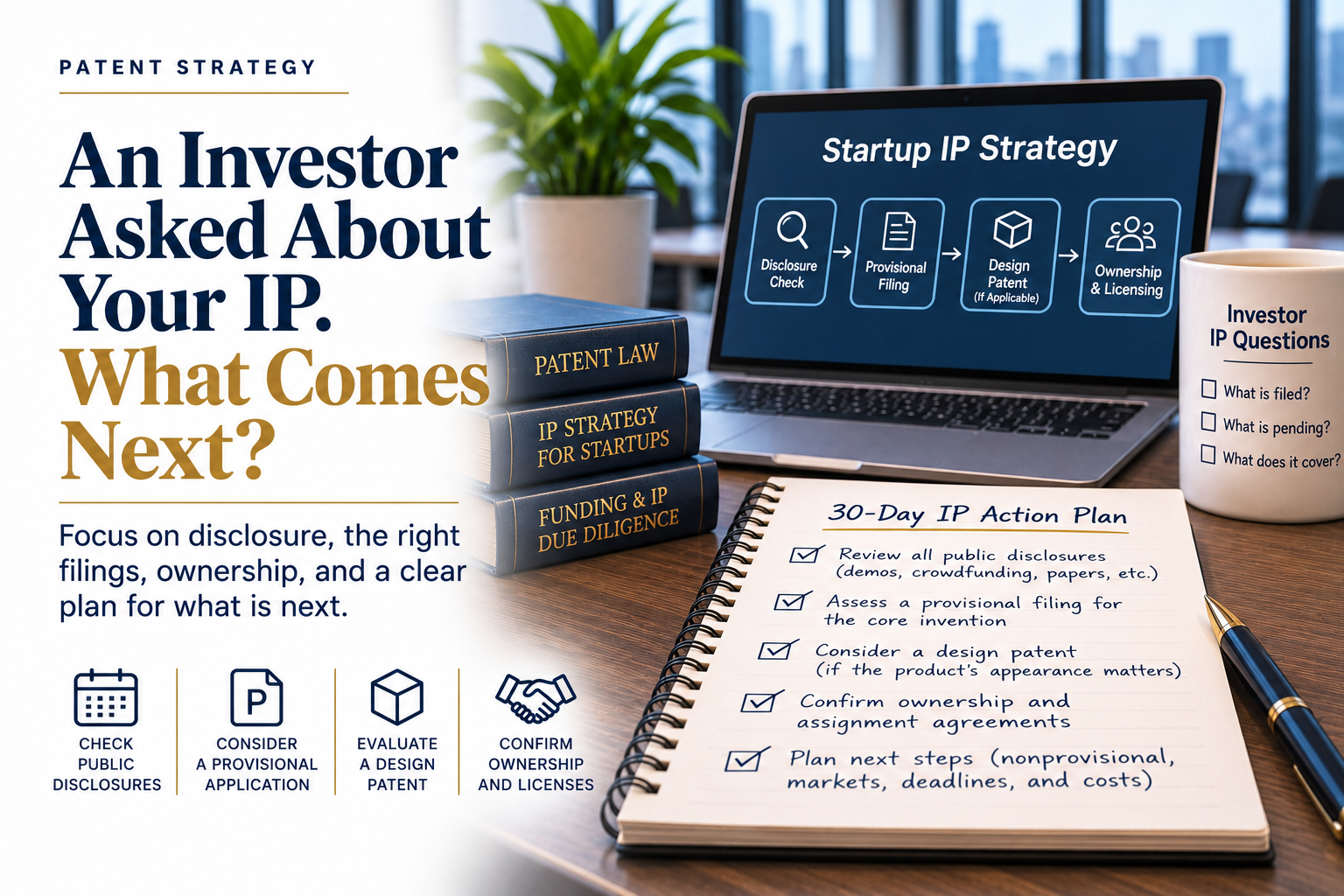
For a medical-device, pharmaceutical, or formulation startup, here is where to focus the next 30 days.
Start with the public-disclosure check.
What has the company already shown the world? The demo day. The crowdfunding page. The poster. The press release.
In the United States, a one-year grace period may apply to an inventor’s own disclosure. In other countries, publishing first may already have closed the door. Knowing what was disclosed and when helps patent counsel assess the remaining options.
Then consider whether a provisional application makes sense for the core invention.
A provisional can establish an earlier filing date for later claims it adequately supports. It allows “patent pending,” but it is not a granted patent.
That is where the drafting matters.
The application needs to describe the invention and explain how to make and use it. Include the relevant formulation ranges, design alternatives, methods, and available data.
A rushed filing that leaves out important details may not support the claims the company needs later.
If the product has a distinctive ornamental appearance, a separate design patent application may also be worth considering.
And check the ownership paperwork.
Does the company own the invention, or have the license it needs? Review the founders’ and contributors’ agreements, confirm any required assignments, and check the terms of existing licenses.
Do not assume paying for the work transferred the patent rights.
Practical takeaway: startup patent strategy should focus on appropriate protection and clear rights, not collecting application numbers before an investor meeting.
Identify what matters to the business. Decide which filings are justified. Be accurate about what is pending, what is granted, and what the company owns or licenses.
Plan the follow-up work now, even if some filings come later.
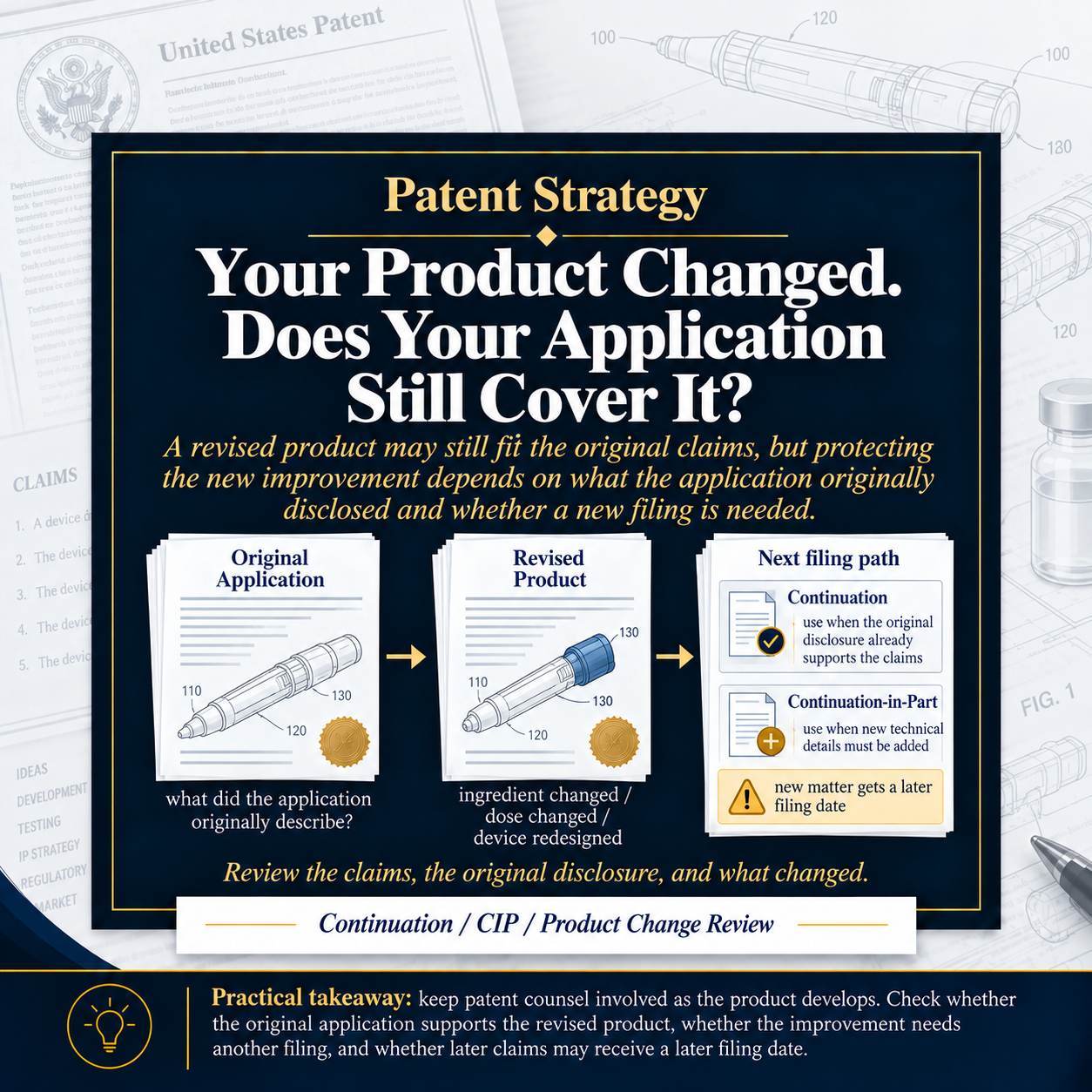
Preserving a provisional’s earlier filing date normally requires a properly supported follow-on application within 12 months that claims the provisional’s benefit.
What should the nonprovisional claim?
Which countries matter?
What deadlines and costs should the company budget for?
The funding round does not pause those deadlines.
The goal is not simply to say, “We filed something.”
It is to explain what the company is protecting, what rights it has, and what comes next.
Sources
USPTO, Provisional Application for Patent. USPTO
https://www.uspto.gov/patents/basics/apply/provisional-application
USPTO, MPEP 2153.01(a), Grace Period Inventor-Originated Disclosure Exception. USPTO
https://www.uspto.gov/web/offices/pac/mpep/s2153.html
USPTO, Design Patent Application Guide. USPTO
https://www.uspto.gov/patents/basics/apply/design-patent
USPTO, MPEP 301, Ownership/Assignability of Patents and Applications. USPTO
https://www.uspto.gov/web/offices/pac/mpep/s301.html